Here you will find images, photos and finder charts of
past, present and future comets visible from the southern hemisphere, plus
other observations of interest.
Members of the general public should read these
astronomical and comet
definitions
, essential
observing tips ,
and how to do simple comet
photography.
An observing planner for comets visible in 2008 and beyond can be downloaded here
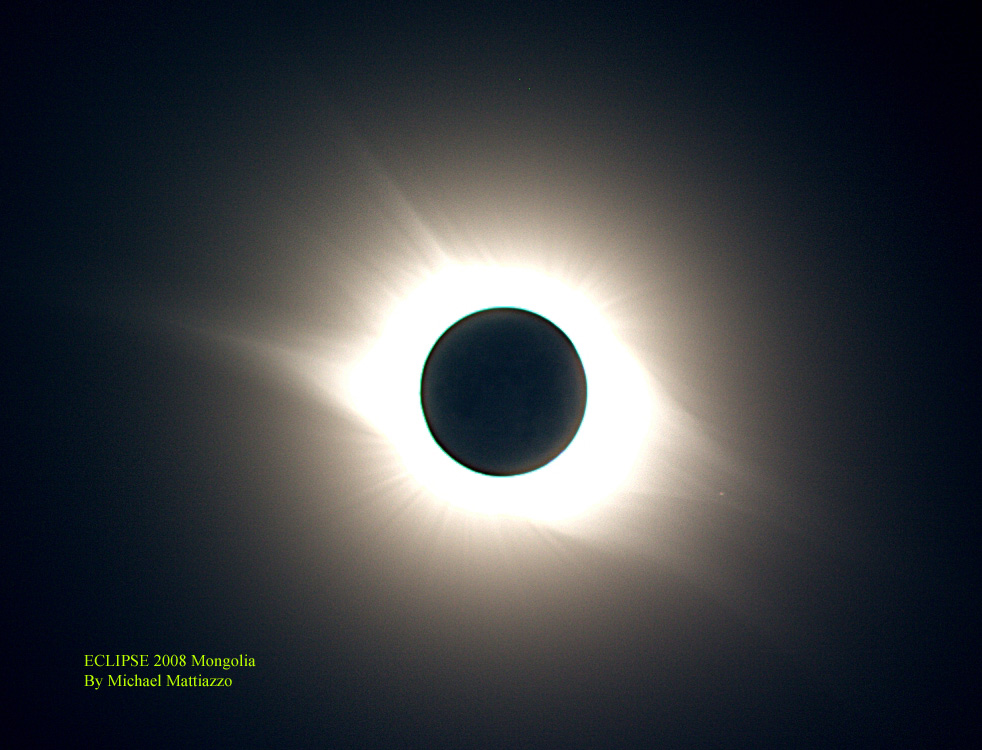
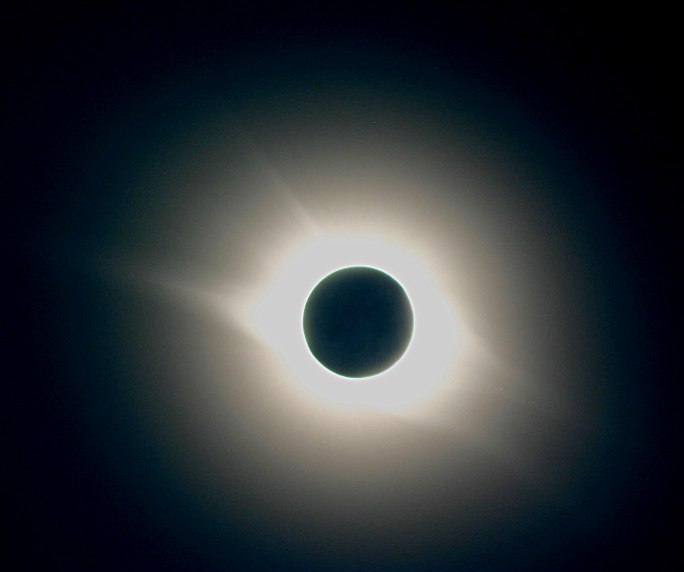
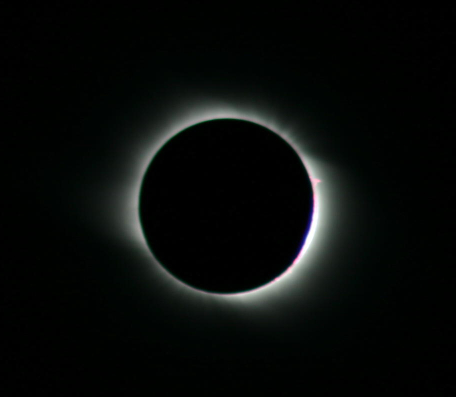
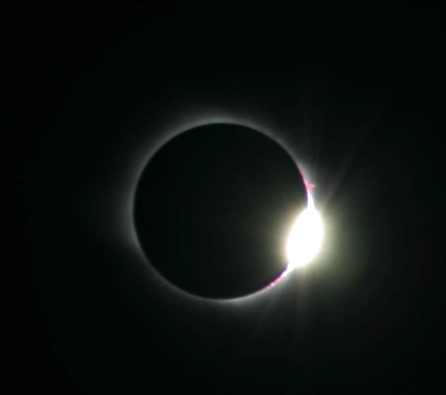
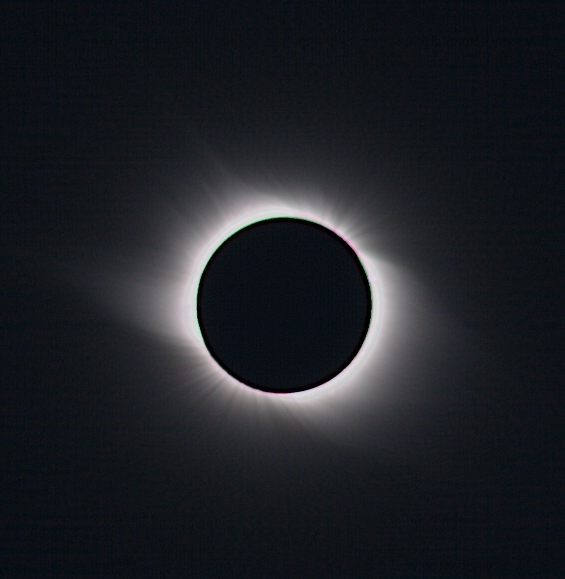
Eclipse Mongolia 2008
Canon 300D digital camera and 300mm zoom lens cropped. ISO 100.
Exposure times from left to right. 1sec, 1/15sec,1/200, 1/200.
Taken near Bulgan gol in western Mongolia.
C/2008 A1 McNaught
The comet is closest to the Sun on Sep 29, 2008 at 1.07AU and may achieve a peak brightness of magnitude 6.0 during September 08 for observers in the southern hemisphere, during evening hours.
Jul 08 in Puppis brightening from magnitude 9 to 8
Aug 08 in Vela and Centaurus brightening from magnitude 7 to 6
Sep 08 in Centaurus steady at magnitude 6.0
Visual observation:
2008 July 4.38 UT: m1=8.9, Dia.=4', DC=4...20cm reflector

2008 April 6.45UT
20x10 sec, C11 SCT at f/3 + MX7c ccd. FOV 15'
C/2007 W1 Boattini

2008 July 04.82UT.
A stack of 3x2 minute exposures, Canon 300D digital camera.
200mm zoom
lens, cropped image. ISO 800. FOV 4 degrees wide.
Naked eye visual magnitude 5.2
This comet was closest to the Earth on June 12 at 0.21AU and closest to the Sun two weeks later on June 24, 2008 at a distance of 0.85AU.
It achieved a peak brightness of
magnitude 4.

C/2007 W1 finder charts
July-Aug 08 in Taurus, Cetus and Aries fading from magnitude 4 to 7 to 9
Sep 08 in Aries and Pisces fading from magnitude 9 to 11.

2008 June 12.35UT.
Left: a stack of 3x1 minute exposures, Canon 300D digital camera.
200mm zoom
lens, cropped image. ISO 800. East is up. FOV 1 degree wide.
Right: a stack of 3x1 minute exposures, Canon 300D digital camera.
100mm zoom
lens, cropped image. ISO 800. East is up. FOV 3 degrees wide. Delta Lepus (mag
3.9) is to the left of the comet.
Moonlight interference. Note the faint ion tail pointing towards Delta Lepus.
Comet was at low elevation and heading into the morning sky.

2008 June 2.42UT.
Left: a stack of 2x2 minute exposures, Canon 300D digital camera.
200mm zoom
lens, cropped image. ISO 800. South is up.
Note NGC 2467 above the comet (star cluster with associated nebulosity)
and M93 to the lower left.
Right: 10x10 sec, C11 SCT at f/3 + MX7c ccd.
2008 June 2.40 UT: m1=4.9, Dia.=20', DC=4...7x50mm B
Comet appears as a large circular haze with no apparent tail visible.
Comet was faintly visible to the unaided
eye using averted vision.
Average sky transparency with limiting magnitude
about 5.5 to 6

2008 May 28.37UT.
Left: a stack of 3x2 minute exposures, Canon 300D digital camera.
90mm zoom
lens, cropped image. ISO 800. Eta Pyx is to the upper left.
Middle: 20x10 sec, C11 SCT at f/3 + MX7c ccd.
Note the Y shaped jet activity emanating from the nucleus.
Right: 20x10 sec, C11 SCT at f/3 + MX7c ccd. digital development.
The coma is not circular in appearance.
C/2006 Q1 McNaught
C/2006 Q1 is a distant comet that peaked at magnitude 11 during April-May 08.

2008 June 2.40 UT. 20x10 sec, C11 SCT at f/3 + MX7c ccd.
8P/Tuttle

2008 March 1.45 UT. 20x10 sec, C11 SCT at f/3 + MX7c ccd. FOV 15'
At its most favourable of appearances since discovery in 1790, comet 8P Tuttle
attained a maximum brightness of 5.5 during its close encounter with the Earth
on 1 January 2008 at a distance of 0.25AU. It is now fading but more slowly
than expected.
17P Holmes

17P Holmes on Jan 4.48UT
2x3 min exposures. Canon 300D digital camera. 200mm zoom lens, cropped.
My observation with the unaided eye on January 4 indicated a magnitude of
about 3.5 and coma
size of 1 x 1.3 degrees!
On October 24, 2007, this usually faint, distant comet 17P Holmes underwent a major
outburst and rapidly rose to magnitude 2. Since then, the comet
has maintained a steady brightness with the coma slowly expanding and
becoming more diffuse. The comet was still as bright as magnitude 4 during
March but appeared large and very diffuse. It is no longer observable from the
southern hemisphere.
C/2006 P1 McNaught
The brightest comet to be seen in 42 years, approached to within 0.17
AU of the Sun on Jan 12, 2007, where it achieved a maximum brightness of
magnitude -5.5, exceeding Venus in brilliance and observable during the
daytime hours. See my photographic record of this spectacular event
here
Current Brightness of Present/Future comets observable from the Southern
Hemisphere on August 24, 2008.
| C/2008 A1 McNaught | 6th magnitude and brightening. Southwestern evening sky. |
| C/2007 W1 Boattini | 8th magnitude and fading. Morning northern sky |
| 6P d'Arrest | 9th magnitude and steady. Observable all night. |
| C/2007 N3 Lulin | 11th magnitude and brightening. Observable all night. |
| C/2007 G1 LINEAR | 12th magnitude and steady. western evening sky. |
If interested in charts for any comets visible from your location, please e-mail me.
Send comments to Michael Mattiazzo : mmatti
[at] yp-connect.net
This page was last updated on
24-Aug-2008.
You are visitor number
since
June 20th 2003.